

How To Clean And Reused Gravel For Side Walk
Planning a Backyard Path: Gravel Paths
Updated: Apr. 01, 2021
Attractive, inexpensive and easy to build
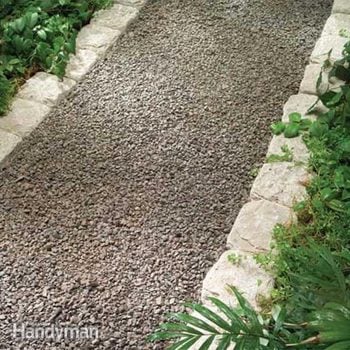
A garden path enhances whatever backyard. Learn almost design factors, limitations and installation techniques for gravel, stone, brick and pavers, forth with attractive edging options.
You might also like: TBD
- Time
- Complication
- Cost
- Multiple Days
- Beginner
- Varies
Lawn gravel paths

Types of gravel
Use 3/4-in. or smaller gravel for paths
Gravel is the easiest to handle and to the lowest degree expensive path textile. It feels soft underfoot, only it's solid enough to handle a loaded wheelbarrow. And although it looks informal, it can complement a formal garden, especially if you add a rock edge.
But gravel has several limitations. It's not ideal for a walkway right to the back door—pebbles volition stick to your shoes and end up on the kitchen floor. It'south not the best choice if yous have to shovel snowfall off it in wintertime. You'll cease upwardly picking rocks out of your garden and m. And it'south tough on bare feet! Ask yourself if a gravel backyard is right for you lot.
Have you e'er thought about pea gravel blossom beds?
Design factors All-time utilise: Gravel paths are best for light to moderate human foot traffic. Longevity/maintenance: A gravel path will terminal indefinitely, but information technology needs upkeep. To keep information technology looking sharp, rake it and pull weeds monthly. Every few years, peak-apparel it with a few buckets of new gravel. Drainage: No special sloping needed. You can follow the grade of your yard, but avert depression spots. Slopes: Avert steep inclines. A heavy rain will launder all your hard work abroad. For steps, use timbers or rock. Borders: Include a edge in your plans. Information technology'south essential for containing the gravel.
Materials Landscaping gravel types come in many sizes and colors. Ask for gravel that compacts well. Information technology'll typically take stones ranging in size from three/four in. down to a powder. Smaller stones (iii/8 in.) are the almost comfortable underfoot. Larger (3/4 in.) stones stay put improve during rainstorms. Buy your gravel from a landscape supplier or straight from a quarry. (Search online for landscaping gravel types or wait under "Sand and Gravel" in your Yellow Pages.)
Borders for backyard gravel paths
Photo 3: Stone edging
Tumbled stone and other stone borders crave fitting, only they expect the most natural.

Photo 4: Brick edging
Bricks fit together easily and form highly traditional border patterns.

Borders
A variety of rock and concrete borders are bachelor.
Metallic edging: Sparse metal edging offers a crisp, clean, "borderless" look. To incorporate the gravel, prepare the edging 1 in. higher than the path. Anchor it with the metal stakes provided. Metal edging is available in green or brownish painted steel or aluminum in 8-ft. and 16-ft. lengths. Cut information technology with a circular saw equipped with a metal-cutting bract or a hacksaw.
Stone: About whatever stone can exist used to border a path. Landscape suppliers volition accept several types. If possible, fit the stones tightly for a smooth appearance. Install the stones on an inch or then of gravel, then fix them with a whack from a condom mallet.
Brick: The brick border is a traditional style. Prepare the bricks upright at an angle or apartment in the ground. Install them in a ii-in. sand bed, then surround them with the gravel and soil to lock them in place.
Primal construction details Laying a gravel path is mostly shovel and wheelbarrow work. You showtime flatten the pathway with a spade, skimming off sod if y'all're crossing a backyard. And then set the borders and pour in about three in. of gravel. You're moving a lot of weight. A strong back is essential—enlist a neighborhood teenager to help out. Have the gravel dumped on your driveway. Shoveling gravel off a backyard or tarp wastes time.
Stone paths

Types of stone
Natural stone for paths is available in many colors and sizes

Photo two: Steppers
Steppers are smaller, irregular-shape stones. They await best when fit more than tightly.

Photograph 3: Flagstones
Flagstones are larger, irregular-shape stones. They cost more steppers just look more dramatic and are more stable underfoot.

Photo 4: Cut stone
Cut stone is easy to fit and appears more formal than irregular shape stones. Use a saw with a diamond blade to trim them.
Stone is rich in color and texture. Each slice is unique. And information technology'southward timeless: A path installed yesterday may expect as if it's been in that location for generations. It's the well-nigh expensive path cloth. This stuff is heavy, but surprisingly easy to install. In about cases, you simply ready each piece on a layer of sand and level it. In loftier-use areas, fit each piece more tightly to lessen the take a chance of tripping.
Pattern factors Best apply: Stone is highly decorative and adept for calorie-free to moderately heavy traffic. Best for pes traffic. It'south non and then good for bikes, wheelbarrows and lawn mowers. The rough, uneven surface is difficult to shovel in winter. Versatility: Ideal for minimal disturbance of gardens and backyard. Groovy for around trees because you lot don't take to disturb the roots. Good material for an indecisive gardener—it's piece of cake to shift the entire path for a new rosebush! Longevity/maintenance: The stones will last forever. You may have to lift and reset them if they dip or stick up also high. Drainage: Let steppingstones follow the lay of the country. Water will run off into the joints. For tightly fitted stone, pitch the path about 1/four in. per ft. to the side. Slopes: Build rock steps to match the path. Purchase riser stones and big tread stones from the stone supplier.
Material selection Limestone, granite, sandstone and slate are the virtually common types, all bachelor in various colors, sizes and shapes. Set up them apart as steppingstones or fit them tightly for a more than solid pathway. Select material that's at least 1 in. thick to avoid cracking.
Here are the basic categories:
- Steppers are minor (15 in. across or less), light and like shooting fish in a barrel to handle, but laying them is slow considering yous have to fit and level each one. Steppers are prone to wobbling and have to exist reset more than often than larger stones.
- Flagstones are large (24 to 48 in. across) irregular pieces. They're slightly more expensive than steppers, simply they're versatile. You can always break a big slice to make smaller ones for tighter fits. Their size and weight helps keep them stable, and they're less likely to shift and need resetting.
- Cut rock is the well-nigh expensive but easiest to fit tightly. It looks particularly good when fix between borders. However, cutting stone will probably require more cutting to achieve the more exact fits.
Order your rock from a landscape or masonry supplier. The supplier will tell you how much coverage (foursquare feet) to expect per ton.
Key construction details Setting stone is a lot like putting together a big, heavy jigsaw puzzle. You lot get-go skim and flatten the proposed pathway, then dump in and smooth out a couple of inches of sand as a setting bed. Patience is essential when it comes to fitting. Spread out the stones and pick and choose for a pleasing pattern. The stones will counterbalance threescore to 200 lbs.! Utilize a dolly to move the big pieces into place. Finish by filling all the joints tightly with sand, soil or mulch (packed in). Plant a ground cover in the joints for an attractive appearance and to assist hold the soil in identify.
Paver paths

Photo i: Pavers are more formal
Pavers are designed to prevarication in a tight design. Colors and patterns vary widely.

Types of pavers
Pavers come up in concrete, clay or granite.

Plate compactor
Use a plate compactor to compact and even out the gravel base of operations and the pavers.

Photo 2: Concrete pavers
Concrete edges.

Photo 3: Clay pavers
Dirt pavers offer the traditional brick look. Most have crisp, square edges.

Photo 4: Stone pavers
Stone pavers are cut from natural stone and are a uniform size. They ofttimes have rough faces.
Pavers have been effectually since the Romans cut stones and placed them on a gravel bed to brand incredibly durable roads. They can withstand heavy apply. Modern versions are made from concrete, dirt or stone. A paver path is a labor-intensive project that requires the rental of a heavy plate compactor for proper installation. But the result is a permanent, tight-plumbing fixtures, relatively smooth path that rivals solid concrete for immovability.
Design factors Best uses: Accommodating first-class material for paths, walks and even driveways, since paver construction can withstand heavy weight. They're highly decorative. You can choose from a diversity of colors and patterns, creating anything from a formal English garden walk to an ancient-looking cobblestone path. Versatility: Ideal for straight or curved paths. Even so, since pavers require a meaty gravel base of operations, changing the path later is a huge task. Apply with caution around mature trees, then as not to harm the roots. Longevity/maintenance: This type of path will last a lifetime. To avoid weeds, sweep off dirt so information technology doesn't accumulate in the joints. Every few years, sweep more sand into the joints to keep the pavers secure. Drainage: Set the path to drain at ane/4 in. per ft. to the side. Set up the pavers slightly in a higher place the surrounding grade. Slopes: Pavers can be laid on steep inclines (if you can walk upwards information technology, pavers can be laid on it), but don't apply them for steps. Utilise rock, concrete or wood for the steps instead.
Materials Concrete pavers are the nearly mutual and various, bachelor in different colors and shapes. You can arrange each shape in a number of patterns. They have beveled edges for easier fitting and shoveling. Expect them to last 30 years or more than. The color will fade slightly equally they weather.
Clay pavers were commonly used for streets in the 1900s. Many versions are bachelor today, from soft-textured molded styles to crisper "wire cutting" types. Colour retentiveness and durability are excellent. Gear up them perfectly fifty-fifty; the edges on some types can fleck. Be certain what y'all purchase is a paver, not a house brick, which is softer and will deteriorate. Stone pavers are the most expensive, at least twice the price of clay or physical pavers. They're often tumbled to brand them look old. They're incredibly difficult and difficult to cut, only they're attractive and volition terminal a lifetime.
You'll observe the largest selection of all types of pavers at a landscape, brick or stone supplier. You can unremarkably find physical pavers at home centers equally well.
Key construction details Setting pavers is a lot of repetitious piece of work and isn't a chore for a novice. You first dig a pathway about 9 in. deep and fill up and compact the base material (gravel that packs well) with a special plate compactor.
And so you lay the edging, spread and level a bed of sand and drop in the pavers. You commonly have to cut some pavers to fit with a saw and diamond bract. To finish, yous set the pavers with the plate compactor and then sweep sand into the joints.
Required Tools for this Backyard Gravel Path Project
Accept the necessary tools for this DIY backyard gravel path project lined up earlier you lot start—you'll save time and frustration.
You lot'll also need a dolly broom, leather gloves, rock chisels, mason'southward hammer, sod cutter and a plate compactor.
Required Materials for this Lawn Gravel Path Projection
Avoid terminal-minute shopping trips by having all your materials set up ahead of time. Here'south a list.
Originally Published: June 10, 2019

Source: https://www.familyhandyman.com/project/planning-a-backyard-path-gravel-paths/
Posted by: robinsondointow.blogspot.com
0 Response to "How To Clean And Reused Gravel For Side Walk"
Post a Comment